Table of Content
- 1 Why Do Seniors with Dementia Have Difficulty with Eating?
- 2 What Foods Are Best for Seniors with Dementia?
- 3 How Can Caregivers Create Better Mealtime Environments?
- 4 How Can Caregivers Adapt Meals as Dementia Progresses?
- 5 How Can Caregivers Keep Mealtimes Positive and Low-Stress?
- 6 Frequently Asked Questions
Dementia caregivers support senior nutrition by preparing simple, familiar meals, creating calm eating environments, and adapting food textures and routines to match changing abilities. Small consistent strategies can make a meaningful difference in a senior’s daily nourishment and overall wellbeing.
Ensuring seniors with dementia eat well at home is one of the most important—and challenging—responsibilities a caregiver faces. As dementia progresses, eating habits, food preferences, and the ability to self-feed often change significantly. Understanding how to navigate these shifts helps caregivers provide consistent nourishing support.
Why Do Seniors with Dementia Have Difficulty with Eating?
Dementia affects the brain in ways that directly impact eating behaviors. Common challenges include:
- Forgetting to eat or feeling full after only a few bites
- Difficulty recognizing food or understanding how to use utensils
- Changes in taste and smell that reduce appetite
- Increased distractibility during mealtimes
- Trouble chewing or swallowing as the condition advances
What Foods Are Best for Seniors with Dementia?
Home Care Assistance caregivers can prepare meals including nutrient-dense, easy-to-eat foods that tend to work best for seniors with dementia, focusing on:
- Soft foods like mashed potatoes, scrambled eggs, yogurt, and bananas
- Finger foods that allow seniors to eat independently, such as cheese cubes, soft bread, or cooked vegetables
- Familiar comfort foods that may trigger positive memories and encourage eating
- Hydrating options like soups, smoothies, and fruits with high water content to prevent dehydration
The responsibilities that come with caring for a loved one with dementia can sometimes feel overwhelming, but help is available. If you’re the primary family caregiver for a senior loved one with cognitive decline, top-rated Clearwater 24-hour home care is available if your loved one’s health has become too difficult to manage without professional expertise. At Home Care Assistance, we take measures to help seniors prevent illness and injury by assisting with exercise and mobility, preparing nutritious meals, helping with bathing and other personal hygiene tasks, and much more.
How Can Caregivers Create Better Mealtime Environments?
The setting in which your loved one eats can be just as important as what he or she eats. Home Care Assistance recommends practical steps including:
- Reducing noise and distractions—turn off the TV and limit background activity
- Using high-contrast plates and bowls to make food easier to see
- Keeping mealtimes at consistent times each day to support routine
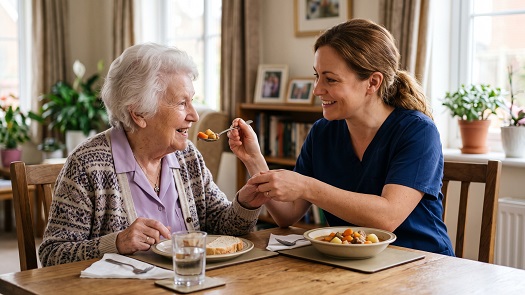
- Sitting with your loved one and eating together to provide social cues and encouragement
- Offering one food item at a time to avoid overwhelming your loved one
Not every senior has the same care needs, which means they don’t all need the same type of Clearwater home care. Families can rely on Home Care Assistance to provide individualized care plans to meet their elderly loved ones’ unique care needs. Our holistic Balanced Care Method was designed to help seniors focus on healthy lifestyle habits such as eating nutritious foods, exercising regularly, and maintaining strong social ties, and our Cognitive Therapeutics Method offers mentally stimulating activities that can boost cognitive health and delay the progress of dementia.
How Can Caregivers Adapt Meals as Dementia Progresses?
As dementia advances, nutritional strategies need to evolve. Caregivers can adapt by:
- Transitioning to softer or pureed foods when chewing becomes difficult
- Offering smaller, more frequent meals rather than three large ones
- Using verbal prompts or gentle demonstrations to guide self-feeding
- Noting which foods are consistently accepted and building meals around those preferences
- Monitoring your loved one’s weight regularly to catch unintended loss early
How Can Caregivers Keep Mealtimes Positive and Low-Stress?
A calm, patient approach can significantly enhance how a senior with dementia responds to eating. Home Care Assistance provides specialized assistance tailored to each client, using techniques such as:
- Avoiding pressure or frustration when food is refused—try again later
- Offering gentle verbal encouragement without rushing
- Serving food at the right temperature, as your loved one may not recognize when food is too hot
- Celebrating small wins like finishing a meal or trying a new food
- Respecting your loved one’s pace and preferences as much as possible
Aging in place can present a few challenges for seniors living with dementia. However, with the help of professional Clearwater dementia home care, older adults can still live independently at home. Families can rely on Home Care Assistance to provide their elderly loved ones with mental and social stimulation, timely medication reminders, assistance with meal prep, and much more. Our caregivers are available around the clock to help your loved one live a happier and healthier life. Home Care Assistance will work with you to customize a care plan that’s just right for your loved one’s needs. Call us today to discuss how we can give you the peace of mind that comes from knowing your loved one is being cared for with professionalism and compassion.
Frequently Asked Questions
How many meals should a senior with dementia eat per day?
+
Most seniors with dementia benefit from five to six small meals or snacks throughout the day rather than three large meals, as smaller portions are easier to manage and less overwhelming.
What should I do if my loved one with dementia refuses to eat?
+
Try offering a different food, adjusting the environment, or waiting and offering the meal again later. Refusal is common and can often be resolved with patience and gentle encouragement.
How do I know if my loved one with dementia is getting enough nutrition?
+
Monitoring body weight, energy levels, and skin condition can provide useful clues. Regular check-ins with a registered dietitian can also ensure nutritional needs are being met.
Are there specific foods caregivers should avoid giving seniors with dementia?
+
Hard, crunchy, or sticky foods can pose a choking risk and should generally be avoided. Foods that are difficult to chew, like tough meats or raw vegetables, may also need to be modified or replaced.
How can I encourage a loved one with dementia to drink more fluids?
+
Offer small amounts of fluid regularly throughout the day and vary options among water, herbal teas, soups, and fruit-based drinks. Many seniors respond better to drinks with mild flavor than plain water.