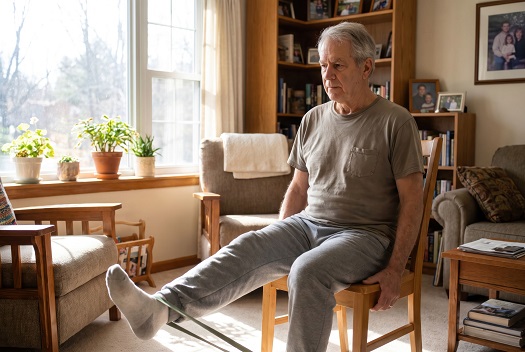
Regular gentle exercise helps seniors maintain strength, balance, and independence at home, reducing fall risk and supporting overall wellbeing. Low-impact activities like stretching, walking, and chair-based exercises are safe starting points for most older adults receiving home care.
Home Care Assistance considers exercise and mobility routines essential for seniors receiving home care. Staying physically active—even in small consistent ways—helps older adults preserve muscle strength, increase coordination, and maintain their quality of life.
Why Is Exercise Important for Seniors in Home Care?
Physical activity provides seniors with a wide range of benefits that go beyond fitness:
- Reduces fall risk by strengthening muscles and enhancing balance
- Supports joint health and reduces stiffness associated with aging
- Boosts mood and mental health by releasing endorphins and reducing feelings of isolation
- Increases circulation, which supports heart health and energy levels
- Promotes independence by helping seniors perform daily tasks with greater ease
Seniors who need help exercising should consider professional in-home care. Clearwater homecare services professionals can be a wonderful boon to seniors. Whether they require around-the-clock supervision or just need assistance with exercise and household tasks a few days a week, seniors can enjoy a higher quality of life with the help of trusted in-home caregivers.
What Types of Exercises Are Safe for Seniors at Home?
The safest exercises for seniors at home are low-impact and adaptable to different fitness levels:
- Chair exercises – Seated leg lifts, ankle rolls, and arm raises build strength without putting stress on joints.
- Stretching routines – Gentle stretches for the neck, shoulders, and legs increase flexibility and reduce stiffness.
- Walking – Short regular walks indoors or outdoors are effective for cardiovascular health and stamina.
- Balance exercises – Standing on one foot (near a wall or sturdy chair for support) reduces fall risk.
- Resistance band exercises – Light resistance bands can build upper and lower body strength safely.
How Can Caregivers Help Seniors Exercise Safely?
At Home Care Assistance, our caregivers play a key role in supporting safe movement at home, and families can use the same approach:
- Create a clear, unobstructed space for movement that’s free of rugs, cords, or clutter.
- Use supportive equipment such as grab bars, nonslip mats, and stable chairs.
- Encourage consistency by incorporating short exercise sessions into daily routines.
- Watch for warning signs like shortness of breath, dizziness, or joint pain, and pause activity if any occur.
- Offer hands-on assistance or verbal encouragement during balance-based activities.
How Often Should Seniors Exercise at Home?
Frequency and duration should match your loved one’s current fitness level and energy:
- Aim for at least 150 minutes of light activity per week spread across multiple days (per the CDC’s physical activity guidelines for older adults).
- Short sessions of 10–15 minutes are just as effective as longer ones, especially for those new to exercise.
- Rest days are important. Allow time for the body to recover between more active days.
- Consistency matters more than intensity. Even light daily movement delivers meaningful long-term benefits.
What Are the Most Common Mobility Challenges for Seniors, and How Can They Be Addressed?
Home Care Assistance helps seniors address several physical changes that can affect their ability to move safely at home:
- Reduced muscle strength – Address this with chair exercises and light resistance training.
- Stiff or painful joints – Gentle stretching and warm-water soaks can ease discomfort before exercise.
- Poor balance – Focus on balance-specific exercises and ensure the home environment is free of hazards.
- Low stamina – Start with short sessions and gradually increase duration over several weeks.
- Fear of falling – Build confidence with assisted exercises and proper safety equipment in place.
Some older adults have serious health issues that make it difficult for them to exercise. If your senior loved one needs hourly or 24-hour home care in or near Clearwater, Home Care Assistance can help. Our caregivers can assist with exercise and mobility, prepare nutritious meals, provide timely medication reminders, and help with a wide array of other important daily tasks.
Families who find it difficult to care for their aging loved ones without assistance can benefit greatly from professional respite, live-in, or overnight home care for their loved ones in Clearwater. Family caregivers who need a break from their caregiving duties can turn to Home Care Assistance. Using our proprietary Balanced Care Method, our respite caregivers can encourage your loved one to eat well, exercise regularly, get plenty of mental and social stimulation, and focus on other lifestyle factors that promote longevity. If your loved one needs help with the challenges of aging, call one of our compassionate Care Managers today
Frequently Asked Questions
What’s the best exercise for seniors with limited mobility?
+
Chair-based exercises, such as seated leg lifts and arm circles, are ideal for seniors with limited mobility because they build strength and flexibility without requiring standing or complex movements.
How do I know if a senior is exercising too hard?
+
Signs of overexertion include shortness of breath, dizziness, chest discomfort, or significant joint pain. If any of these occur, stop activity immediately and allow the senior to rest.
Can seniors with arthritis exercise safely at home?
+
Yes. Gentle, low-impact activities like stretching and short walks are generally tolerated well by seniors with arthritis and can reduce stiffness and increase joint flexibility over time.
What home modifications support safer movement for seniors?
+
Installing grab bars in bathrooms, removing tripping hazards like loose rugs, improving lighting in hallways, and using nonslip mats in high-traffic areas all contribute to a safer home environment for senior movement.
How can caregivers motivate seniors who are reluctant to exercise?
+
Starting with very short, enjoyable activities like a brief walk or simple stretching to music can build a positive association with movement. Setting small achievable goals and celebrating progress also encourages consistency.